Essay
Chop Wood, Carry Water
May 2026
Most people living well are not doing anything extraordinary. They are just not behind.
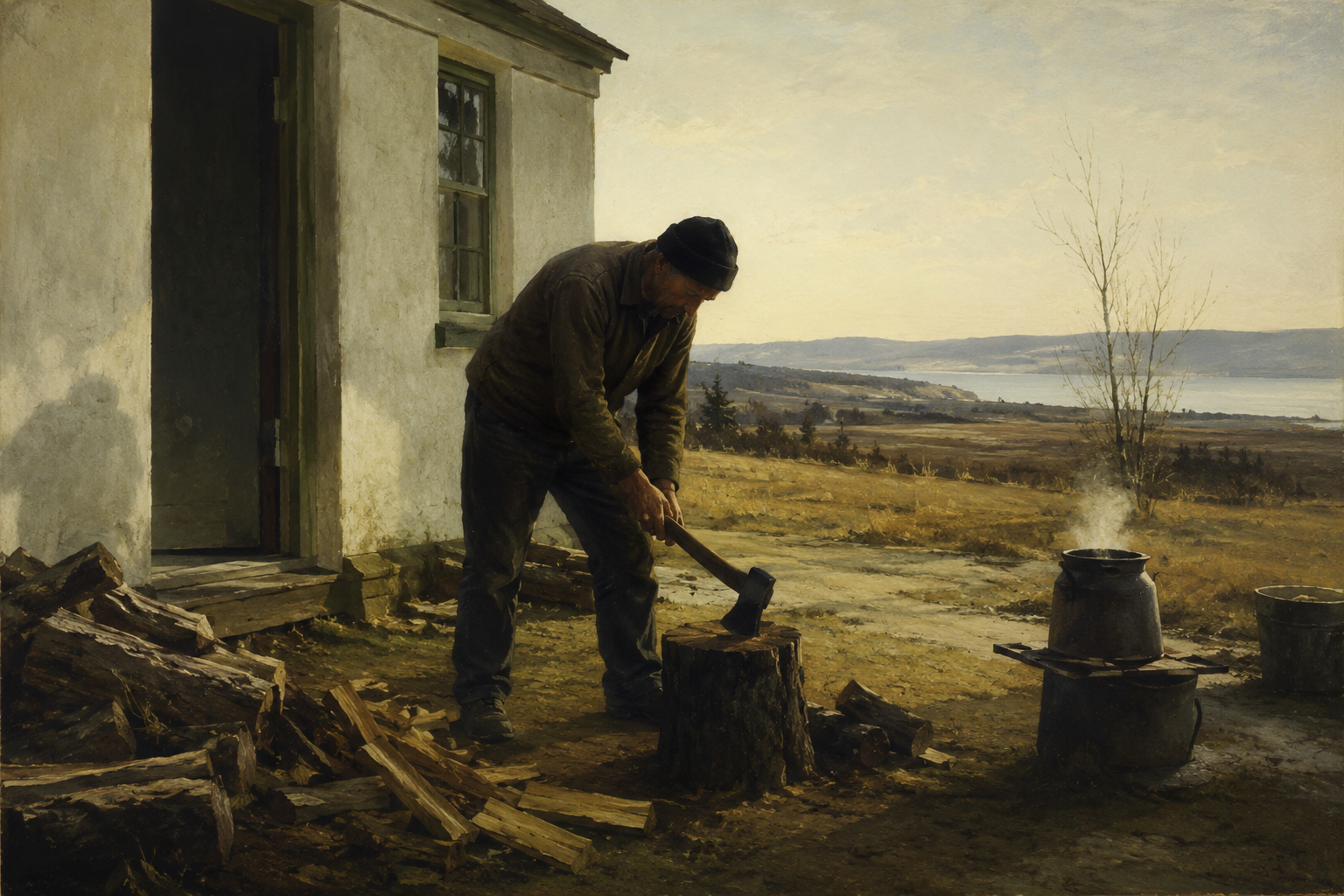
There is a kind of person you have probably noticed. They are not necessarily the most talented or the most driven. They do not talk much about productivity or optimization. But when you look at their life, something is working. The hard conversation got had. The car didn't break down because it was maintained. The trip was planned before it needed to be. Things that become problems for other people never quite become problems for them, because they were dealt with at the right time, before they had a chance to accumulate or escalate or turn into something that costs more than it should have. Their days have a quality of ease that isn't luck and isn't money. It's something more like friction that isn't there.
Then there is the other kind. Smart, often. Capable, certainly. But perpetually behind. The thing that needed doing is still undone. The appointment never got scheduled. The financial situation is vague in ways that create a persistent low-level dread. There is always something pressing, always something dropped, always a version of scramble. And underneath the scramble, something quieter and more damaging: a person who has slowly lost confidence in their own ability to keep up with their own life.
The difference between these two people is not intelligence or ambition or even time. It is something simpler and harder to name. One of them keeps pace with the maintenance requirements of their life. The other doesn't.
This pattern shows up everywhere. Not in one category of tasks but across all of them. Finances, health, relationships, the body, physical space, creative work, the ten thousand small obligations that a life continuously generates. Every domain has its version of chop wood, carry water. The doer keeps pace across all of it. The examples are infinite. The pattern is singular.
There is an old Zen saying. Before enlightenment, chop wood, carry water. After enlightenment, chop wood, carry water.
The point is that the tasks don't change. They were always there, they will always be there, and no amount of arrival changes that. The wood needs chopping. The water needs carrying. The question was never whether the work would be required. The question is only what your relationship to it will be.
The maintenance tasks of a modern life are not so different. They are not glamorous. They do not announce themselves as important. They just keep coming, quietly, reliably, without drama, and they require a response. The doer has made a kind of peace with this. Not an enthusiastic peace, not a performance of loving the grind, just a quiet acceptance that the tasks are the texture of a life and resistance to them is more costly than doing them.
The person who hasn't made that peace is not lazier, exactly. They are in a different relationship with discomfort. The task carries a mild unpleasantness, the friction of initiation, the tedium of execution, the low-grade resistance that precedes almost any act of maintenance, and they have developed a habit of not quite starting. Of putting it down the road a little. Of negotiating with themselves about when the right moment will be.
The right moment, of course, rarely arrives on its own.
What falls behind is never just the task. It is everything the task was quietly holding in place.
The unscheduled medical appointment becomes a background worry. The unresolved conflict with someone you love becomes a distance neither of you quite names. The financial thing being avoided becomes a shapeless dread that colors mornings. The home repair deferred becomes a slow degradation of the space you live in. None of these are dramatic. That's the point. They don't announce themselves as quality of life issues. They just quietly lower the ceiling on how good things feel.
This is where the leaking happens. Not in one place but everywhere at once, in a dozen small pressures that never quite resolve because the habit of resolution never quite formed. The person living this way is not suffering exactly. But they are carrying something. And they carry it constantly, even when they're supposed to be resting, even when they're supposed to be enjoying themselves. The rest is contaminated. The leisure has a low hum of guilt running under it. Something should be getting done.
It would be easy to say that the doers simply have more discipline. More willpower. Were raised right or found the right system or read the right book. But that explanation doesn't hold up against the people you actually know. The doers in your life are not uniformly more disciplined in every domain. They are not ascetics or optimizers. They just seem to have stopped negotiating with the task.
That's the closer thing. Not discipline but the absence of prolonged internal negotiation. The task presents itself and they do it, or schedule it, or handle it. Not because they love it, not because it's their passion, but because their relationship with mild discomfort is functional enough that the task doesn't require a whole internal drama before it gets done. Whether the task is an oil change or a difficult conversation or a financial reckoning, the process is the same. It needs doing. They do it.
There is also something about time, specifically about the reality of the future self. People who keep pace seem to have a more vivid sense that the person who will inherit today's undone tasks is them. That future self is not abstract. They can feel the weight of what they're considering leaving behind. And that felt sense of continuity makes the mild discomfort of doing the thing now more tolerable than the accumulated cost of not doing it.
Here is where it compounds.
Neither of these patterns stays flat. They accelerate, in opposite directions, and they do so across every domain of a life simultaneously.
The person keeping pace builds something over time that is hard to name but easy to feel. Margin. Self-trust. A relationship with themselves in which they are someone who handles things. Each completed task makes the next one slightly easier, not because the tasks get simpler but because the identity solidifies. They are a person who does the thing. That belief is load-bearing. It holds up a lot.
The person falling behind builds something too. Not just a backlog of undone things but a quietly eroding belief in their own capacity. The undone task becomes evidence. The evidence accumulates. At some point the avoidance isn't just a habit, it's a conclusion. I am someone who doesn't handle things. And that conclusion makes every future task heavier before it even begins.
Both loops feed themselves. The gap between these two people widens not through dramatic choices or defining moments but through ten thousand small ones, repeated across every corner of life, for years. The arithmetic is slow and then it isn't.
The people living well, in my observation, are not usually doing anything extraordinary. They are not optimized or exceptional or operating at some elevated level of human performance. They are just not behind. They made the appointment. They had the conversation. They dealt with the thing before it became a crisis. They kept pace, across everything, consistently, for long enough that the cumulative effect became a life that feels, from the inside, like it has air in it.
Their rest is actual rest. Their leisure isn't haunted. Their relationships aren't quietly weighted by things left unsaid or undone. They have a felt sense of agency that doesn't come from achievement but from the simpler fact of being someone who keeps up with their own life.
That's the whole thing, really. Not a secret, not a system. Just the quiet, unglamorous, never-finished practice of doing what the day requires before the day requires it loudly.
Chop wood. Carry water. Then do it again tomorrow.